.

tête du cochon - Longman & Eagle

Showing posts with label Cooking. Show all posts

Fresh Pasta


By Scott

The difference between fresh pasta and store bought dried pasta is something like the difference between fresh salmon from the local fishmonger and canned salmon from aisle three at the grocery store.  Now there’s nothing wrong with dried pasta.  It absolutely has its place and I definitely have it stock-piled in our pantry at home for a home-cooked meal on the fly.  But if you have the time and plan ahead, making fresh pasta can be incredibly fulfilling.  Pasta rollers and cutter are expensive to be sure, but think of them as an investment.  Once you’ve made fresh pasta you may never go back to the store-bought stuff.  The end product is so much silkier and delicate than the store bought stuff.  Plus, it’s a lot of fun to make.  There’s nothing quite so satisfying as staring at a plate of noodles you made by hand, paired with a homemade sauce, and a glass of red wine.

I’ve made fresh pasta several times but I’m far from an expert.  Thankfully, there’s no shortage of great recipes out there. I decided to use Thomas Keller’s recipe from his The French Laundry cookbook, figuring I couldn’t go wrong with a master like Keller guiding the way.  What’s great about Keller’s recipe is that it is simple, great tasting, and almost entirely impossible to screw up.  I began with a classic pasta technique:  the flour well.   

Measure out your flour and pile it on your work surface.  Then, carve out a hole in the middle of the flour, leaving enough space to fit your other ingredients.  If your well is too small your ingredients will spill out all over your work surface.  Take it from my experience; it’s a problem you don’t want to deal with.  Now, fill your well – in my case with eggs, a little olive oil, and a touch of whole milk.  Now comes the fun part.  It’s mixing time.   

Using you fingers – or a fork for those that want to avoid a gooey mess – break up your eggs and mix them together with the olive oil and milk.  Next, in a circular motion continue mixing while slowly incorporating the flour along the inner edges of the flour well.  You want to mix in the flour slowly to create a smooth final product.   Once your wet ingredients have been incorporated and the dough is beginning to come together, you have no choice but to use your hands. Start by forming the dough into a ball and letting it rest for a few minutes (I let mine rest for about 10 minutes), covered with plastic wrap.  While you allow the dough to rest, it’s a good time to clean up your workspace.

Now it’s time to do the heavy lifting.  Make sure your working surface is well floured.  And for that matter, you’ll want to keep some spare flour close by for dusting throughout the process.  Using the heal of your hand, knead the pasta dough using an outward, rocking motion.  You’re not folding the dough over onto itself though. Kneading dough by hand is a physical process.  Trust me though, the final product will be worth the workout.  Keller advises to knead the dough for 10-15 minutes, but he suggests erring on the side of kneading longer than you think you need to.  As you work the dough you will see it change in texture, becoming smoother and shinier.  Keller tells us in his book that the dough is done when it develops a springy quality – when you poke it, the displaced dough wants to spring back into place.


Once you’ve kneaded the dough sufficiently, let it rest again while you clean your workspace one more time and prepare for rolling.  To make my pasta I used a KitchenAid mixer pasta-maker attachment.  Start by rolling the pasta out by hand with a rolling pin and then into sheets using a pasta roller.   


Begin with a thick setting and work your way slowly until the sheet is to your desired thickness.  Use plenty of flour throughout the process to prevent the dough from sticking to itself or the work surface.   


You’ll be amazed at how far just a bit of dough stretches.  Of course, if the dough is getting too long for your taste, cut it down to a more useable size.  When you’re ready, cut the pasta into strips using a pasta cutter. 
   

In a pinch, you can use a knife.  Fresh pasta takes only a few minutes to cook so be mindful of that when you’re finally ready to make the finished product.   


Here, I paired mine with a pesto sauce and charred cherry tomatoes.  Whichever way you choose to enjoy it, I guarantee you’ll think twice before grabbing a box of the dried stuff the next time you’re at the store.

-Scott

KELLER’S INGREDIENTS
1 ¾ cups all purpose flour
6 large egg yolks
1 large egg
1 tbl milk
1 ½ tsp olive oil

Homemade Marshmallows

-By Bill


It’s holiday season, so home baking is in full swing.  If ever there was a time to give an edible gift, it is now.  Unfortunately that applies to everyone, so while you may be inclined to bust out the cookie cutters and knock out some gingerbread men, you won’t be the only one (put them over there with the other ones, Griswold!).

Fortunately you have other options: toffee, nut brittles, jams, fudge, but my personal favorite go-to-treat is homemade marshmallows.  They’re really quite simple (and fun) to make, dead cheap and are about 1 million times better than that 3 year old bag of Jet-Puffed you have sitting in the back of your pantry.

Needs:

1 cup (8oz) cold water
1.5 cups granulated sugar (I prefer cane sugar but beet sugar will work)
1 cup (8oz) corn syrup (yes, the dreaded stuff everyone fears)
3 packets gelatin(e)
Confectioner’s (powdered) sugar for dusting

Sauce pan
Candy thermometer
Stand mixer fitted with whisk attachment
Knife/Pizza cutter
Baking dish for molding

Ingriedients
Add ½ of the water (4oz) plus the 3 packets of gelatin to the bowl of the mixer.  This will ‘bloom’ the gelatin. 

"Blooming" Gelatin
Add the remaining water, sugar and corn syrup to a sauce pan with a candy thermometer clipped on the pan.  Bring this to a boil and let reach a temperate of 240 degrees.  This is the ‘soft ball’ stage of candy making.

Heat Water, Sugar, and Corn Syrup to 240 Degrees.
Turn the mixer on low speed and gradually add the sugar syrup to the bloomed gelatin.  Be VERY careful and stream the syrup down the side of the mixer bowl.  Hot syrup hitting an active whisk will A) make a mess and B) burn like hell.  Once all the syrup is added, turn the mixer on full speed and let go for a full 12 minutes.  The idea is to whip air into the mixture while it cools and the gelatin sets.  Your mixer will likely phase in and out, that’s just an internal safety to keep it from overheating, it’ll be okay.

Mix Syrup Mixture with Gelatin
After 12 minutes of you will have an enormous bowl full of white, fluffy, STICKY marshmallow.  I cannot overemphasize just how sticky it will be. 

12 Minutes of Mixing = Marshmallows
You’ll want to turn the mixture out (use a silicone spatula if you have one) into a dish sprinkled with powdered sugar.  Work quickly and form it into a single, even layer of marshmallow.  The longer it sits the less pliable it becomes, so do this right away.  Dust the top with more powdered sugar.

Fresh Marshmallows Setting Up
After a few hours you can begin cutting the individual marshmallows.  This is best done with a sharp, thin blade (I use a carving knife but a pizza cutter would work as well).  The marshmallows will not cut apart, but more so they will be perforated and you can pull them apart.  Make them as big or small as you care to, they make the best s’mores ever if made large.  Coat each individually with powdered sugar and keep in an air tight bag/canister.  They’ll keep for a while but are best fresh, plus they are awesome and you’ll just want to eat them all right away.

The Finished Product
 -Bill

The Aperitif

-By Bill

The holiday season is upon us, which for many means home entertaining with family and friends.  Nothing gets the spirits going (pun intended) like a pre-dinner cocktail, which in my experience is what everyone goes for the second they walk in the door.  Rather than the usual beer or glass of wine, why not plan ahead and offer something a little more thought out, the aperitif.

By definition, the aperitif is a before-dinner drink to stimulate the appetite.  There are no rules to it, so it’s an opportunity to be creative.  You could serve a warm drink, sparkling drink, something on ice, etc.  Ideally you can get a drink in the hand of your guests the minute they walk in, something to wash down some pre-dinner nibbles, so pitcher drinks are a great way to go.  A few ideas are listed below, very holiday-ish, but liberties should always be taken.

Wassail


Mulled Wine/Glogg/Gluhwein


Hot Toddy


Eggnog


Cocoa (or Chocolate) with Peppermint Scnhapps


Bourbon Maple Cider (Pictured):


3 oz Cider
1 oz Bourbon/Whiskey
1 t Maple Syrup
Cinnamon to top

Mix Cider, Bourbon and Syrup in a shaker/glass, serve over ice and top with a dash of cinnamon (or rim the glass with cinnamon).


-Bill

Pumpkin Galore

-By Jess

As the leaves begin to turn, and that Chicago breeze becomes a little cooler, I am always comforted by the sight of pumpkins everywhere. Wanting to find more use for pumpkins then cutting some up for Halloween, I was shocked to see how many recipes call for canned pumpkin puree, so I figured I would get a big ole’ pumpkin and roast it myself. Although canned puree is relatively tasty, the pumpkin in its whole form allowed me to make pumpkin pie, pumpkin cookies, and of course roasted the seeds.

Pumpkin Puree

The recipe I followed online for homemade pumpkin puree called for using one large pumpkin, but I will not go that route again due to the long cooking time, and will rather use many smaller pumpkins.

1) Heat oven to 325 degrees
2) Cut pumpkin into multiple pieces (in the picture below I used a large pumpkin and cut it into 8 slices) and remove seeds/fibers
3) Place pumpkin slices, rind side up, onto a tray covered with foil
4) Roast for 1.5 hours, or until tender

Roasted Pumpkins
5) Scrape “meat” of pumpkin off the rind, and blend in a food processor or blender until smooth.

Pumpkin Ready to be Pureed

After Pureeing
6) You must remove as much moisture as possible from the puree in order to use for baking. Use cheesecloth (preferable) or paper towel (like I did – not the best option but will work). Squeeze the liquid out of the puree into a separate bowl, then refrigerate the puree to use for later.

Puree out of Food Processor
Removing Moisture from Puree
Seeds

While you’re roasting the pumpkin you can get your seeds ready as well!

1) Rinse pumpkin seeds under cold water and pick out the pulp and strings. (This is easiest just after you've removed the seeds from the pumpkin, before the pulp has dried.)
2) Place the pumpkin seeds in a single layer on an oiled baking sheet, stirring to coat. If you prefer, omit the oil and coat with non-stick cooking spray.
3) Sprinkle with salt, pepper, paprika, garlic powder, and onion powder (or just salt…) and bake at 325 degrees F until toasted, about 25 minutes, checking and stirring after 10 minutes.
4) Let cool and store in an air-tight container.
5) Enjoy!
Roasted Pumpkin Seeds
Pie Crust

Once again, I defer to Thomas Keller’s “Ad Hoc” recipe book. His pie crust works so well for sweet and savory dishes, and is truly simple! Find it here. Note that pumpkin pie only calls for one half of the dough yielded by this recipe, however I find it convenient to make the full recipe and freeze the other half the dough for a later date.

Ingredients
1 cup butter (2 sticks), cubed and chilled
2 1/4 cups all-purpose flour
1 teaspoon salt
8 to 10 tablespoons ice water

Directions:
Put the butter, flour, and salt in the food processor, and pulse lightly just until the mixture resembles wet sand. Add the water, 1 tablespoon at a time, pulsing briefly after each spoonful of water. Keep adding water until the dough just begins to gather into larger clumps.

Transfer equal amounts of the dough into 2 resealable plastic bags and pat each into a disk. Let rest in the refrigerator for at least 30 minutes. Remove 1 of the disks from the bag to a flour coated surface. Using a rolling pin, roll the dough out to a 10-inch round. Gently fit the rolled dough into a 9-inch pie pan, and refrigerate while you prepare the other ingredients.
Yield: 2 (9-inch) pie crusts

Pie Crust Ready for Filling
Pie Filling

While your dough is chilling, you can pull out the puree and get the filling going. I adapted the recipe from the Magnolia Bakery cookbook, which was a fabulous birthday gift from my friend Sarah :).

Ingredients
2 cups of your homemade pumpkin puree
2 large eggs, at room temperature
½ cup sugar
¼ cup firmly packed dark brown sugar
1 tsp cinnamon
½ tsp nutmeg
¼ tsp ginger
¼ tsp salt
1 ¼ cups evaporate milk
3 tablespoons of bourbon (as is with my banana bread recipe, I really like Wild Turkey’s American Honey)

Filling Crust with Puree
Directions
In a large bowl, on the medium speed of an electric mixer, combine the pumpkin and eggs, and beat well. Add the sugars and spices, combine until well mixed. Slowly stir in the milk and bourbon. Pour the filling into the pie crust and bake at 350 for 75 minutes, or until a tester comes out mostly clean.

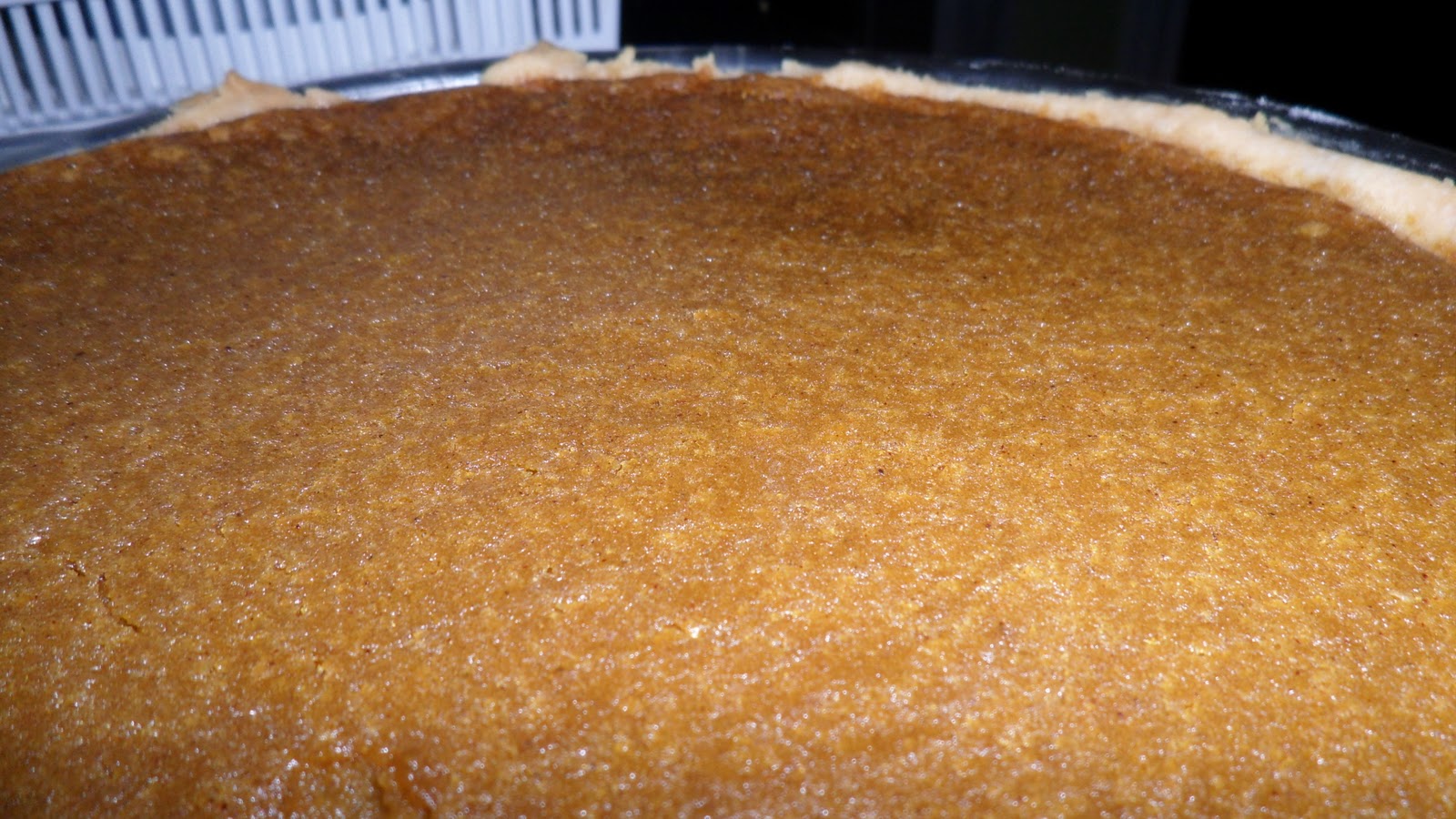
After Baking
Finally, this pumpkin pie will be complete with some homemade whipped cream.

The Finished Pie
Whisk 2 cups heavy cream, 2 tsps sugar, and 2 tsps vanilla in a stand mixer until it forms stiff peaks. Yep, that’s all :)

Pumpkin Walnut Cookies with Brown Butter Frosting

There was a great deal of leftover puree, so I decided to keep the pumpkin party going and make these sweet and savory cookies. Find the recipe here as well.

2 1/2 cups all-purpose flour
1 tablespoon baking powder
1 teaspoon salt
1/2 teaspoon nutmeg
1/2 teaspoon ground cinnamon
1/4 teaspoon ground ginger
4 tablespoons unsalted butter, softened
1 1/2 cups firmly packed light brown sugar
2 large eggs, at room temperature
1 cup canned pumpkin puree
2 teaspoons vanilla extract
1 cup chopped walnuts

Frosting

2 cups powdered sugar
3 tablespoons milk
1 teaspoon vanilla extract
3 tablespoons unsalted butter


Directions:

Preheat oven to 375°;
1) In a bowl combine the flour, baking powder, salt, allspice, cinnamon, and ginger; set aside.
2) In another bowl, cream the butter and sugar until evenly combined.
3) Add in the eggs, pumpkin, and vanilla; beat well.
4) Add the dry ingredients and mix thoroughly; stir in the walnuts.
5) Drop by rounded teaspoonfuls onto ungreased cookie sheets, leaving several inches between for    expansion.The batter will seem extremely soft compared with most cookie doughs, but it will firm up during baking.
6) Bake for 12 minutes; cool the cookies on the sheets for 10-12 minutes, then removed to a wire rack to cool completely.
7) To make the frosting: add sugar, milk, and vanilla to a bowl; set aside.
8) In a small saucepan over medium-high heat, cook the butter until lightly browned, about 3-5 minutes, stirring frequently.
9) Remove from the heat, add to the other ingredients and beat until smooth and creamy; cover until ready to use.
10) When the cookies are completely cool, spread a generous amount of frosting on each cookie, and top with a walnut half.
11) Let icing set before stacking the cookies or they will stick together.

Finished Cookies
-Jess


Stuffed

-By Scott 

          As I suspect most of you Food Babies readers will agree, Thanksgiving is by far the best holiday.  I love everything about the day.  I love spending time planning out how to cook the meal.  I love shopping for ingredients.  I love the smell of the kitchen at 11 o’clock in the morning as the turkey’s skin begins to brown under the heat of the oven.  I love watching football out of the corner of one eye while chopping garlic for the mashed potatoes with the other.  I love smelling the distinct sweetness of the candied yams as they come out of the oven.  But perhaps more than anything else, I love the stuffing.  Admittedly, as many people are, I’m a sides man when it comes to Thanksgiving.  And for me, stuffing is king. 

          In general, when it comes to Thanksgiving side dishes, I’m fairly traditional.  There needs to be mashed potatoes. There needs to be sweet potatoes or yams. There needs to be cranberry sauce.  There needs to be pumpkin pie.  And there most certainly needs to be stuffing.  On a side note, for the purposes of this post, “stuffing” and “dressing” are synonymous.  I know, I know, stuffing is cooked inside the turkey and dressing outside.  But I call them both stuffing.  My apologies to all of you stuffing purists out there.

          Stuffing can be an extremely versatile dish, but I have some ingredients that I almost always include in whatever version of stuffing I make.  I like to include a protein in the mix, preferably a forcemeat.  I’m partial to a spicy sausage in particular, which I like to play against a sweet, rich, eggy bread.  I also like to include toasted nuts to add both texture and flavor.  Cheese is another ingredient I often add to my stuffing.  It isn’t always suited to the dish, depending on the other ingredients, but it can really add depth of flavor and creaminess to the combination of ingredients. 

          As a test run for the big day, I put together a batch of stuffing recently.  The stuffing I serve will probably look a little different on Thanksgiving, but my wife and I were happy with the end result of my efforts.  And the method I used is pretty translatable to most stuffing preparations. 

          Half of the battle when making stuffing, I’ve found, is being organized with your ingredients.  Stuffing can be surprisingly labor intensive depending on how many items you use.  Prepping everything before you start mixing the ingredients together can prevent a stress headache.   

Bread - Ready to be Toasted
Start by cutting your bread – here I used a nothing-special loaf of white bread from the supermarket – into ½-1” cubes, and then toasting the cubes in the oven at 400 degrees.  You can use bread that is a day or two past its prime, or even store bought croutons, but I prefer to buy bread fresh and then dry it out in the oven.   
Toasted Pecans
Along with your bread, you can make double use of the oven by toasting your nuts.  In this case, I used pecans, a nut I find works well in sausage-centric stuffing.  While the bread and nuts are toasting in the oven, sear your hot (spicy-wise) Italian sausage in a hot (temperature-wise) pan.   
Saute Sausage
You need the pan to be hot enough to caramelize the sausage chunks, which will add great flavor to your stuffing.  After setting the sausage aside, sauté a mixture of onions, celery and leeks – in that order – on medium heat until all of the vegetables are cooked through.
Saute Onions, Celery, and Leeks
Now, it’s time to assemble the stuffing for baking.  Turn the oven to 375 degrees and butter your baking dish.  In a large bowl, combine the sausage with the onions, celery, and leeks.  Next, add two beaten eggs and a drizzle of heavy cream to the mixture.  Both add a nice richness to the finished product.  After crumbling in your now toasted pecans, sharp cheddar cheese, and chopped parsley, add the toasted bread.  Make sure everything is evenly distributed in the bowl.  Finally, it’s time for the last ingredient: stock (I used turkey).  You want to add enough to the concoction that the stuffing is sufficiently moist, but you need to be careful not to over-saturate the bread.  Then, it’s time for the oven to do its work – 20-30 minutes covered and 25-30 minutes uncovered.   
Stuffing Hot Out of the Oven
The stuffing is done when it’s cooked through and the top has developed a golden brown crust.  Timing will really depend on the amount of stuffing you make and the true temperature of your oven so watch it closely.
The Finished Product
Meaty, crunchy, moist, creamy, salty, and spicy, the perfect Thanksgiving side dish.  I can’t wait to try it again on Thanksgiving, sandwiched perfectly in between a few slices of turkey and a bevy of other side dishes.

-Scott
INGREDIENTS:
Loaf of white bread
Hot Italian Sausage
Celery
Onion
Leeks
Pecans
Heavy cream
Stock
Cheddar cheese
Eggs
Parsley
Salt and pepper for seasoning
Oil for sautéing
Butter for your baking dish